The follow-up sequence that signs more proposals (and when to stop)
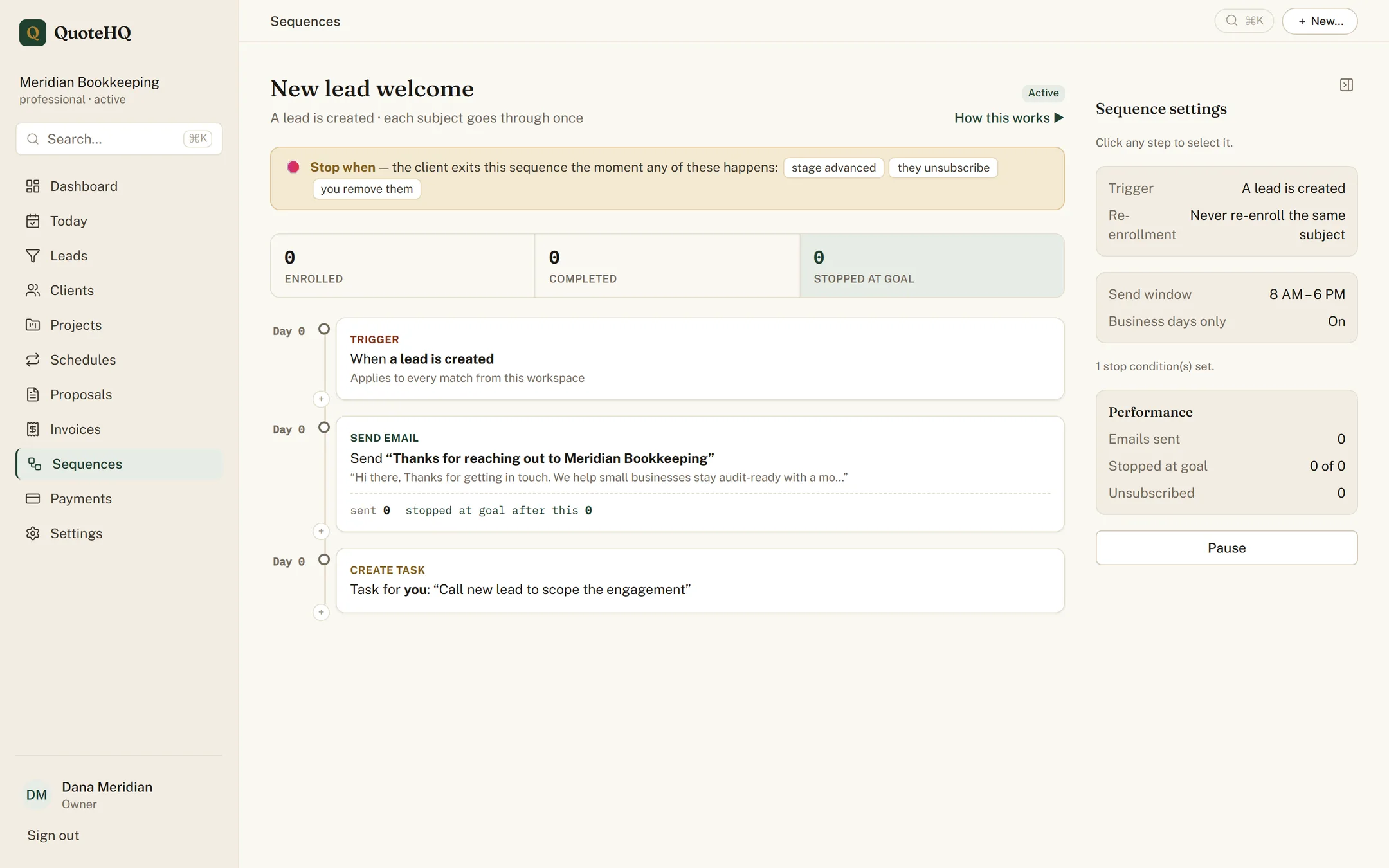
A proposal you sent and never heard back about isn’t necessarily a lost deal. Most of the time it’s just quiet — the client meant to reply, got busy, and the moment passed. The businesses that win the most proposals aren’t the ones with the best pitch; they’re the ones who follow up reliably without it costing them an afternoon of remembering who they sent what to three weeks ago.
What a follow-up sequence actually is
A sequence is a small chain of steps that runs against a proposal once it’s sent: wait, send a nudge, wait longer, send another, and stop the moment the client acts. The trigger is the send itself; the exit is the client signing. Everything in between runs on its own, against the schedule you set, without you having to remember which proposals are still waiting on a reply. The automation page covers how sequences work across the app, and proposals covers what happens once one gets signed.
A cadence that reads as attentive, not desperate
The gap between follow-ups matters as much as the message. A nudge the day after you sent a proposal reads as impatient; total silence for a month reads as if you forgot. A workable cadence for most service proposals is a short check-in a few days after sending, a slightly more direct follow-up a week or so after that, and a final, low-pressure note before you stop. Three touches, spaced out, each one shorter than the last — that’s usually enough to catch a client who genuinely meant to reply and hasn’t yet, without turning into the vendor who won’t stop emailing.
A cadence that doesn't wear out its welcome
- A few days after sending
- a short check-in
- About a week later
- a more direct follow-up
- Before you stop
- one last, low-pressure note
Templated, but not generic
A follow-up that reads as a form letter defeats the purpose — a client can tell the difference between a note written for them and a note written for “whoever opens this next.” The sequence itself is templated, because writing a fresh email for every quiet proposal doesn’t scale, but what it sends is built from the real proposal it’s attached to: the client’s name, the job, the amount, a working link back to the exact page they were looking at. The automation is in the timing and the sending, not in making every client sound like the same client.
The same logic applies to who gets told what. A sequence running quietly in the background shouldn’t mean you’re out of the loop — a note on the lead when a follow-up goes out, and a clear signal the moment the client finally does something, keeps the automation assistive rather than opaque. You should never have to open the sequence configuration to find out where a specific proposal actually stands.
When to stop
The most important property of a good sequence is that it knows when to end — and there are two different endings worth telling apart. The good ending is the client signing: the moment that happens, the sequence exits on its own, because the goal it existed for is met and any further nudge would just be noise on an already-won deal. The other ending is you deciding, after the last scheduled touch goes unanswered, that continuing to email isn’t moving anything and it’s time to either call, walk away, or check back in a season later instead of a week later. A sequence should make the first ending automatic and the second one a real decision you make, not something the tool keeps doing without your say.
A sequence that never stops on its own — that keeps emailing a client who already signed somewhere else, or already told you no — doesn’t read as persistent. It reads as not paying attention, which is worse for the relationship than never following up at all.
What’s worth watching
Not every proposal that goes quiet is a timing problem — sometimes it’s a signal that something upstream needs adjusting. If a follow-up sequence is routinely running its full course without a reply across many proposals, that’s worth treating as feedback on the proposal itself, not just a reason to add a fourth touch. A price that’s consistently too high, a scope that’s unclear, or a first message that buries the ask are all things a longer sequence can’t fix. The sequence is there to make sure a good proposal gets a fair chance to be read; it isn’t a substitute for a proposal worth replying to.
What happens when they finally reply
Whether the answer is yes, no, or “check back next quarter,” a reply is the signal to get a human back into the conversation, not the sequence. A signed proposal exits automatically and turns into billable work the same day, as covered in proposal to paid. A firm no is worth logging and moving on from cleanly. And a genuine “not yet” is worth a real note on the lead, not another sequence quietly running in the background hoping the timing improves on its own.
Consultants and contractors both live and die by this exact gap — the proposal that’s good enough to win but never gets a reply because nobody followed up. See how the whole proposal-to-signed loop plays out for consultants and for contractors. The sequence isn’t there to replace the follow-up call — it’s there so the routine nudges happen reliably, and the calls you do make are the ones a human actually needs to have.
Quote it. Sign it. Get paid.
Start a free trial and run the whole loop — proposal, signature, deposit, books that write themselves — before the day is out.